

One Starship test can reset the pace of the whole launch market, and that is why every starship test flight update gets picked apart far beyond SpaceX watchers alone. When the vehicle flies, slips, or fails to complete a target, the knock-on effects reach launch cadence, regulatory timelines, tanker planning, and NASA's wider lunar architecture. For readers following this as an operational story rather than a spectacle, the real question is not simply when the next launch happens. It is what SpaceX needs to prove next.
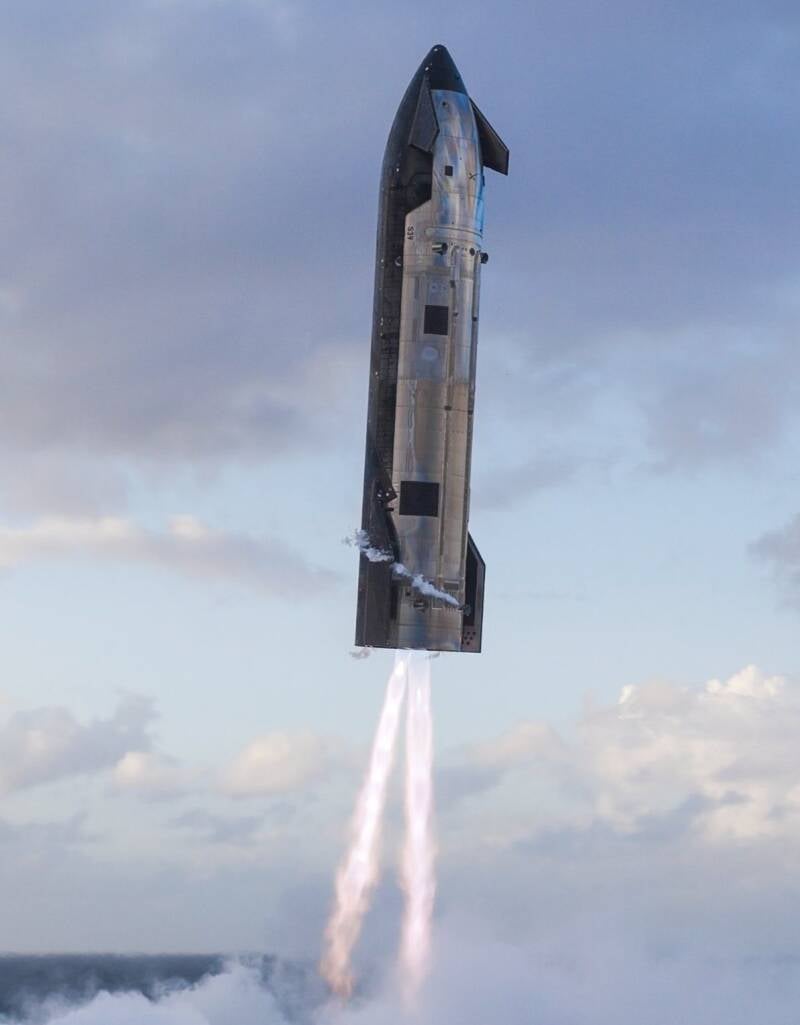
Credit SpaceX
The current picture around Starship is best understood as a programme still deep in iterative development, but now operating under far greater public and regulatory scrutiny than in its earliest campaign phases. Each integrated test flight has delivered a mix of progress and fresh failure data. That combination is familiar in launch development, yet with Starship the scale is unusually high because the vehicle is intended to handle everything from satellite deployment to lunar landing support and, eventually, ultra-heavy cargo transport.
SpaceX has continued refining both stages of the system - the Super Heavy booster and the Starship upper stage - while also adjusting ground infrastructure, flight software, engine reliability, and flight termination logic. That matters because Starship is not being validated as a single mission vehicle. It is being built as a reusable transport system, and reusability changes what counts as success. Clearing the tower, surviving stage separation, reaching planned trajectory, relighting engines, controlling re-entry, and demonstrating recoverable hardware all sit on the checklist.
So the latest starship test flight update is rarely a simple pass-or-fail headline. A mission can miss several planned objectives and still retire major technical risk. Equally, a visually dramatic launch can conceal stubborn problems in thermal protection, propellant management, or guidance performance.
What the next flight is likely meant to prove
The next Starship mission, whenever it flies, is expected to focus less on spectacle and more on sequence discipline. SpaceX needs a cleaner end-to-end demonstration of systems it has already reached in part but not yet closed out consistently. The key areas are increasingly obvious.
First, booster performance remains central. Super Heavy has to launch reliably, execute stage separation cleanly, and support controlled return operations. Any progress towards repeatable booster recovery is strategically important because the whole economic case for Starship depends on frequent reuse, not one-off heavy-lift victories.
Second, the upper stage has to show better on-orbit and post-separation control. A useful test is not just about reaching space. It is about stable attitude control, engine performance in the right phase of flight, and predictable vehicle behaviour during coast, re-entry, and terminal operations. If SpaceX is serious about future payload deployment, tanker flights, and lunar mission support, upper-stage confidence becomes a gating item.
Third, the programme needs mission-duration maturity. Early test flights naturally emphasise ascent events, but Starship's future role requires more than surviving the first few minutes. It has to behave like a spacecraft, not only like a rocket stage. That includes thermal resilience, propellant handling over time, and communication stability through demanding portions of flight.
Why the FAA still shapes the timeline
For all the attention on hardware, the schedule is not dictated by engineering alone. Federal Aviation Administration oversight continues to shape when Starship can return to flight, particularly after incidents that trigger review, corrective action, or licence modification. This is where online discussion often runs ahead of reality.
A static fire, engine test, or pad activity can suggest momentum, but none of that guarantees an immediate launch date. SpaceX must show that any identified issues have been addressed to the satisfaction of regulators, and the company also has to operate within environmental and public safety constraints tied to the launch site. That process can frustrate fans, but it is now part of the normal Starship rhythm.
There is also a broader point here. As Starship moves from experimental spectacle towards operational necessity for multiple customers, regulatory confidence matters more, not less. A vehicle expected to support national-spaceflight goals cannot rely on improvised expectations around flight approvals.
The hardware story behind the headlines
Headline coverage usually focuses on whether the rocket got off the pad, but the more revealing story often sits in the hardware cycle between flights. Vehicle stacking, engine swaps, ship selection, booster readiness, pad repairs, and tank farm work all offer clues about what SpaceX is prioritising.
If turnaround work appears concentrated on launch infrastructure, that can indicate the company is trying to harden the site after previous stress points. If activity centres on engines and stage-specific testing, the bottleneck may be vehicle reliability rather than ground systems. Those distinctions matter because they affect confidence in cadence. A delayed flight caused by one vehicle issue is different from a delayed flight caused by a recurring system-wide weakness.
Raptor engine performance remains especially significant. Starship's architecture asks an enormous amount of its propulsion system across ignition events, throttle control, ascent loads, and, in the long term, repeated operational cycles. SpaceX has made visible progress in engine production and handling, but test flights still have to confirm that production maturity translates into reliable mission performance.
What this means for Starlink and lunar plans
The stakes around Starship are no longer confined to development bragging rights. SpaceX needs the vehicle for large-scale Starlink deployment economics, especially for heavier next-generation satellites that do not fit neatly within existing launch constraints. Falcon 9 remains a remarkably effective workhorse, but Starship is the vehicle meant to change deployment volume and cost structure.
Then there is NASA. The Human Landing System pathway depends heavily on Starship-derived capabilities, including orbital refuelling concepts that have yet to be demonstrated at the required scale. That is why each test flight matters beyond SpaceX's own roadmap. Delays do not just move a company milestone. They can ripple into Artemis planning, contractor sequencing, and expectations around when lunar architecture becomes practical rather than aspirational.
That does not mean every slip is a crisis. Launch development at this scale is rarely linear, and some delay is preferable to forcing a flight before the vehicle or ground systems are ready. But the margin for indefinite experimentation is narrower now than it was when Starship was judged mainly as a bold prototype programme.
How to read the next starship test flight update
The smartest way to read the next starship test flight update is to separate visible drama from programme value. A flight that ends early may still be highly productive if it validates key events that were previously unproven. By the same token, a flight that reaches a later phase than expected can still expose serious limitations if the vehicle loses control authority, misses restart objectives, or fails to protect critical structures during re-entry.
Watch for a few practical markers. Did all engines perform as planned through the critical parts of ascent? Was stage separation clean and timely? Did the booster return profile improve? Did the ship maintain proper control in space and through descent? Was there evidence of stronger thermal protection performance? Those are the signs of a programme moving from dramatic experimentation towards dependable operations.
It is also worth watching how quickly SpaceX can cycle to the following vehicle. A successful launch matters, but an efficient response after the flight may matter just as much. High cadence is not a side benefit for Starship. It is the business case.
For specialist readers, this is the real lens. Starship is trying to become a transportation system, not a one-night headline. That means the next milestone is only meaningful if it shortens the path to repeatability.
SpaceX FrontPage readers do not need another countdown clock dressed up as analysis. What matters now is whether the next mission reduces uncertainty in the places that still define the programme: engine reliability, upper-stage control, regulatory clearance, and the pace between flights. If those pieces tighten together, Starship moves closer to being operational infrastructure rather than an always-future promise.
The most useful closing thought is also the simplest: with Starship, progress is real, but proof still has to arrive in sequence.
Add comment
Comments