

If you are checking for the next SpaceX launch date, the first thing to know is that any published time is best treated as the latest target, not a fixed appointment. That is not a dodge. It is simply how modern launch operations work when one company is trying to fly at a pace that would have looked extraordinary only a few years ago.
For regular launch watchers, the real story is not just when the next Falcon 9 leaves the pad. It is why that date sits where it does, what could move it by hours or days, and what the mission says about SpaceX’s wider flight rhythm. A launch date is useful. The operational context behind it is what helps you track the company properly.
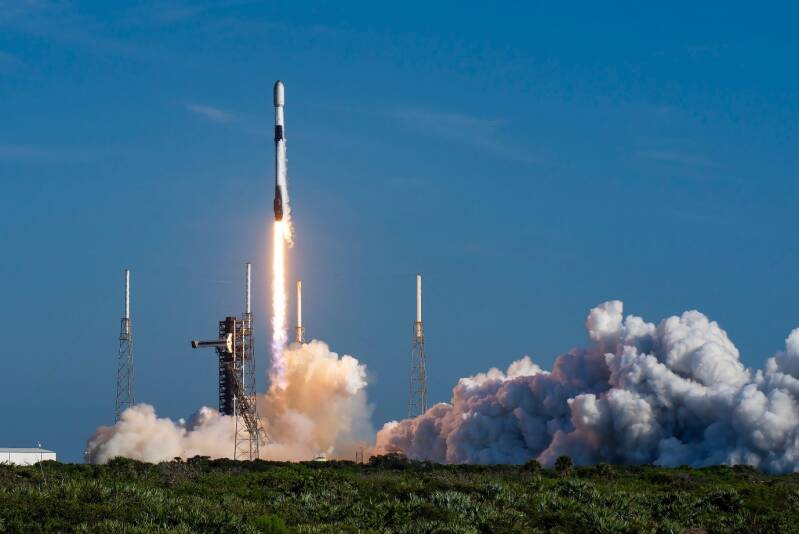
Why the next SpaceX launch date can change so quickly
SpaceX runs one of the busiest launch manifests in the world, and that pace creates both flexibility and fragility. A mission can be pencilled in for one day, then slip because the booster needs extra inspection, range availability tightens, payload processing runs long, or upper-level winds fail to co-operate. None of that is unusual. It is the cost of flying often while trying to maintain tight turnaround standards.
Weather remains the most obvious variable, especially for missions from Florida. Even when conditions look acceptable for liftoff, recovery weather in the Atlantic can still become the deciding factor. If drone ship conditions are outside limits, that can force a delay even if the pad itself is ready. For Falcon 9 in particular, first-stage recovery is not a side detail. It is built into the company’s operating model.
Range constraints matter too. Launch providers do not control every piece of the timetable. Eastern and Western range scheduling, airspace and maritime closures, and conflicts with other missions can all shift target times. As launch cadence rises across the wider sector, that pressure only grows.
Where to look for the next SpaceX launch date
If you want the most reliable picture, look for the latest mission status rather than the oldest announced date. Early schedule projections are useful for planning, but they are often aspirational. The closer a mission gets to fuelling operations and formal launch window confirmation, the more dependable the timing becomes.
That is why experienced followers tend to track a mission in phases. At first, there is the rough placement on the manifest. Then comes a narrower target day. After that, operators move towards a specific window, often alongside notices to mariners, airspace advisories, or public mission updates. The launch date becomes more meaningful as supporting operational signals line up.
For readers following SpaceX FrontPage, that is usually the difference between a calendar placeholder and a launch worth setting an alert for. The mission does not become real when social media starts speculating. It becomes real when multiple operational cues begin pointing in the same direction.
What the current launch cadence tells us
The next SpaceX launch date matters because it is rarely an isolated event. It sits inside a much broader cadence built around Starlink deployments, commercial satellite missions, NASA flights, rideshares, and occasional high-profile test operations. Some launches carry outsized public attention, but many of the company’s most important flights are routine on purpose. Routine is the product.
That matters when reading the schedule. A Starlink mission might appear more movable than a crewed or government flight, but it still occupies pad time, booster availability, fairing inventory, and recovery assets. One delay can ripple through more than one mission. Equally, SpaceX has become increasingly capable of absorbing disruptions because it has built a deeper bench of reusable hardware and a more mature launch system around it.
The result is a schedule that can look unstable day to day while remaining remarkably productive over the course of a month or quarter. That is one reason casual observers sometimes think dates are unreliable, while regular trackers see something else entirely: a high-tempo launch system adjusting in real time.
Next SpaceX launch date and mission type
Not every SpaceX mission behaves the same way on the calendar. If you are trying to gauge how likely a date is to hold, mission type offers clues.
A commercial communications satellite launch may depend on customer readiness and final payload integration milestones. A NASA mission can involve stricter procedural gates and less appetite for compressed timelines. A Starlink launch benefits from SpaceX controlling both launcher and payload, which can make scheduling more agile, though not immune to technical slips. Transporter rideshare missions bring their own complexity because multiple payload customers must align.
Then there is Starship. If the next SpaceX launch date you are searching for concerns Starship rather than Falcon 9, expectations need to shift immediately. Starship campaigns are driven not just by vehicle readiness, but also by regulatory clearance, test objectives, hardware modifications, ground systems, and post-flight analysis. That makes the date more politically and technically exposed than a standard Falcon mission.
Falcon 9 reliability versus schedule certainty
Falcon 9 has reached a level of operational maturity that supports frequent launch attempts, rapid booster reuse, and increasingly normalised turnaround cycles. But reliability does not automatically mean a launch date will stay fixed. In fact, highly mature systems can produce the opposite impression, because teams will often stand down at the last moment rather than force a marginal attempt.
That is generally a sign of a healthy launch culture. A scrub can be frustrating if you planned your evening around a webcast, but from an operational point of view it usually means the process is doing its job. SpaceX has shown repeatedly that it would rather recycle and try again under better conditions than chase the optics of keeping an earlier slot.
For launch followers, the practical lesson is simple: confidence should rise sharply only once fuelling is imminent and no major technical or weather issues remain unresolved. Before that stage, every target remains provisional, even if it appears across several schedules.
How to read launch timing like a regular tracker
The most useful way to follow the next SpaceX launch date is to stop thinking in terms of a single static number on a calendar. Think instead in layers of confidence.
A date that first appears weeks in advance is often a planning marker. A date repeated in updated mission reporting is more substantial. A date paired with a defined launch window, pad assignment, and recovery zone activity is stronger still. And once the launch director is working through the final count, you are finally dealing with something close to real-time certainty.
There is also a difference between a day and a window. Many missions have instantaneous launch opportunities, especially those tied to orbital mechanics. Others have broader windows, which gives teams more room to manage technical issues or weather constraints. That distinction can affect whether a scrub means a delay of minutes, 24 hours, or longer.
This is where specialist coverage earns its keep. A good launch update does not just repeat a date. It tells you whether the mission is locked to an orbital slot, whether a backup opportunity exists, whether booster recovery is planned, and whether the current schedule depends on a regulatory or technical milestone still hanging in the balance.
Why readers keep asking for the next launch
There is a reason this question never goes away. The next SpaceX launch date is not only a scheduling query. It is a pulse check on the company itself. Each upcoming mission signals something about pad utilisation, booster fleet health, Starlink expansion, customer demand, and the pace of commercial space more broadly.
For some readers, it is about catching a livestream. For others, it is a way of tracking whether SpaceX is maintaining its cadence, clearing backlog, supporting NASA commitments, or moving towards a more ambitious phase of Starship testing. The date is the headline. The tempo behind it is the industry story.
That is also why delays rarely mean what critics or overexcited supporters claim they mean. A one-day slip is often just a one-day slip. A longer stand-down can point to a technical concern worth watching, but even then the significance depends on mission class, vehicle, and where the issue sits in the flow. Context is everything.
What to expect next
The next SpaceX launch date will keep moving until it does not. That is not uncertainty for its own sake. It is the visible surface of a launch system balancing hardware, weather, regulations, orbital mechanics, and sheer volume.
The smart way to follow it is to stay flexible, watch for operational confirmation, and pay attention to what the mission sits beside on the manifest. If the target holds, you get another data point in SpaceX’s extraordinary launch cadence. If it slips, the change is usually telling you something useful. Keep watching the pattern, not just the clock.
Add comment
Comments