Inside SpaceX’s Finances and Elon Musk’s Fortune: How Rockets, Risk, and Reinvestment Built a Private Space Empire

For space enthusiasts, SpaceX is usually experienced through spectacular launches, synchronized booster landings, and ambitious talk of Mars. Yet beneath the visuals lies a financial structure that is just as transformative as the technology itself. The story of SpaceX’s money is inseparable from the story of Elon Musk’s fortune, because the company’s strategy, risk appetite, and long-term goals are tightly bound to how Musk has chosen to build and deploy his wealth.

Read more »

NASA Continues Efforts to Reestablish Contact With MAVEN Mars Orbiter

NASA engineers are continuing efforts to reestablish communications with the agency’s MAVEN spacecraft, a long-running Mars orbiter that has played a key role in understanding how the Red Planet lost much of its atmosphere. Contact with MAVEN (Mars Atmosphere and Volatile EvolutioN) was lost on Dec. 6, and recovery attempts to date have not been successful.

Read more »

New Study Warns Satellite Megaconstellations Pose Major Threat to Future Astronomy

A new peer-reviewed study published in Nature has issued one of the strongest warnings yet about the growing impact of satellite megaconstellations on the low Earth orbit (LEO) environment and the future of astronomical research. With companies such as SpaceX, Amazon, and OneWeb—and national governments including those of the United States and China—pushing ahead with plans for fleets of hundreds to tens of thousands of satellites, scientists say the consequences for space-based and ground-based observations could be profound.

Read more »

NASA’s Jonny Kim and Two Cosmonauts Return to Earth After Eight-Month Space Station Mission

NASA astronaut Jonny Kim and two Russian cosmonauts returned to Earth early Tuesday, landing on the frozen steppe of Kazakhstan after an eight-month mission aboard the International Space Station (ISS). Their Soyuz MS-27/73S spacecraft touched down at 12:03 a.m. EST (0503 UTC; 10:03 a.m. local time), ending a mission that spanned nearly 4,000 orbits and more than 104 million miles traveled.

Read more »

SpaceX wraps 2025 national security campaign with final NRO launch and last-ever Falcon 9 landing at LZ-2

SpaceX closed out its 2025 national security launch campaign on Tuesday with a classified mission for the National Reconnaissance Office (NRO), marking both its final intelligence payload of the year and what is expected to be the last Falcon 9 booster landing at Landing Zone 2 (LZ-2) at Cape Canaveral. The mission, designated NROL-77, successfully deployed its payload, the NRO confirmed late Tuesday.

Read more »

European Space Policy Pays Off: Germany Awarded First Artemis Lunar Seat

 A German astronaut will become the first European to travel to the Moon under NASA’s Artemis program, the European Space Agency (ESA) announced on Thursday during its high-level Ministerial Council meeting in Bremen. The decision marks a historic milestone for Europe’s human spaceflight ambitions, made possible by major European contributions to lunar exploration hardware.

Read more »

STARSHIP

Starship Full Stack Wet Dress Rehearsal

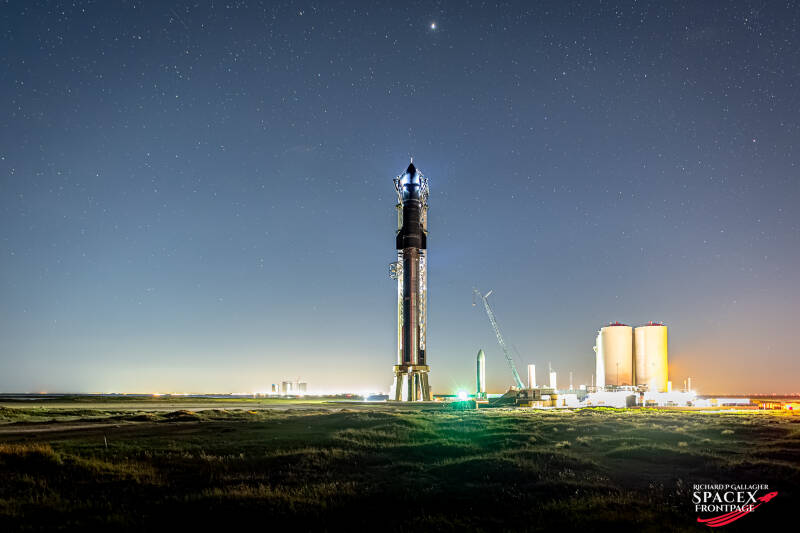
Starship and Super Heavy were loaded with more than 10 million pounds of propellant today october 24th in a flight-like rehearsal ahead of launch.  Vehicle is ready for the second test flight of a fully integrated Starship, pending regulatory approval. SpaceX progressing while we hear the FAA and Fish and Wildlife are as well. Next launch attempt coming before too long.

STARSHIP OVERVIEW

SpaceX’s Starship spacecraft and Super Heavy rocket – collectively referred to as Starship – represent a fully reusable transportation system designed to carry both crew and cargo to Earth orbit, the Moon, Mars and beyond. Starship is the world’s most powerful launch vehicle ever developed, capable of carrying up to 150 metric tonnes fully reusable and 250 metric tonnes expendable. HEIGHT120 m DIAMETER:9 m (fully reusable).

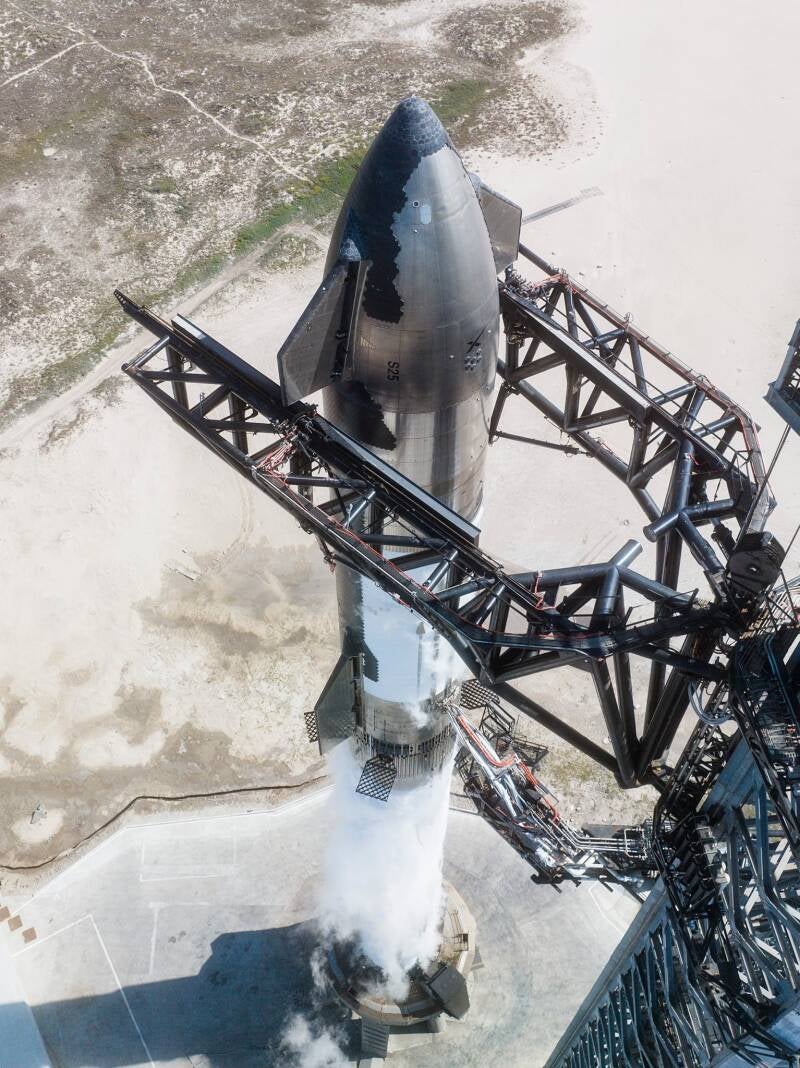
   Photo of Starship 25 and Booster 9 Full-stack awaiting for the second orbital launch.

First Orbital launch