

A crew launch date on a public calendar rarely stays still for long. If you are tracking the NASA crew mission schedule, you are really tracking a moving chain of spacecraft readiness, ISS traffic planning, weather, certification work and, increasingly, commercial provider performance.For readers who follow launch cadence rather than occasional headline moments, that is what makes NASA’s crew planning so compelling. The schedule is not just a list of flights. It is a live indicator of how well the United States can sustain long-duration human spaceflight, rotate International Space Station crews on time and absorb setbacks without breaking the rhythm of operations.
Credit NASA
Why the NASA crew mission schedule keeps shifting
NASA publishes target dates, but crewed missions sit in a far tighter operational box than most cargo flights. A station crew rotation has to line up with docking port availability, on-orbit handover time, capsule turnaround, launch vehicle readiness and the health of the station itself. If one part slips, the rest can move with it.
That matters more now because crew transport is no longer tied to a single vehicle. NASA has relied heavily on SpaceX Crew Dragon for routine ISS rotation missions while Boeing’s Starliner works through a more difficult path to regular service. In theory, two US crew systems should give NASA flexibility. In practice, the system only becomes resilient once both vehicles are flying predictably.
When readers ask why a mission slipped by a few weeks or even a few months, the answer is often less dramatic than it sounds. It may be a parachute review, a battery assessment, a launch pad conflict, software validation, or a need to keep the right mix of crew skills aboard station. Human spaceflight schedules are built around margins, and those margins are rarely generous.
The main missions on the NASA crew mission schedule
For most followers, the backbone of the NASA crew mission schedule is the ISS rotation cycle. These are the operational flights that swap long-duration crews in and out of low Earth orbit. They tend to attract less mainstream attention than a first flight or a test milestone, but they are the centre of NASA’s current human spaceflight tempo.
Crew Dragon rotation missions
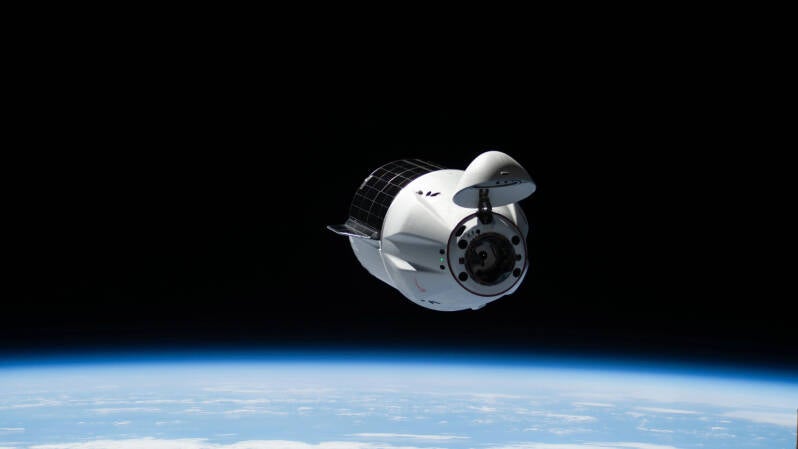
SpaceX Crew Dragon has become the workhorse of NASA’s Commercial Crew era. Regular missions launch four-person crews to the ISS, remain docked for months, and return with astronauts and time-sensitive cargo. Because Dragon is now an established system, changes to these flights usually reflect broader station operations rather than basic vehicle uncertainty - although technical reviews can still shift a date.
The pattern is familiar. One crew launches, overlaps briefly with the existing station team, and then the departing crew comes home. That overlap is operationally valuable. It gives NASA time for handover of experiments, maintenance tasks and station responsibilities without creating a hard cut between expeditions.
Starliner’s place in the queue
Boeing’s Starliner remains one of the most closely watched variables in the crew schedule. NASA wants a second operational crew transport system for obvious reasons: redundancy, pricing leverage and protection against a grounding of either fleet. But wanting a second system and fielding one on a steady basis are different things.
Every Starliner test, review and certification milestone affects how NASA thinks about future assignments. If Starliner enters routine service, mission allocation becomes more flexible. If it slips again, Dragon continues carrying the operational load. That has real implications for capsule availability, crew assignment planning and the overall resilience of the ISS programme.
What actually drives a crew launch date
A NASA crew launch is the product of stacked dependencies. The spacecraft has to be ready, the rocket has to be ready, the crew has to complete final integrated training, and the station has to be in the right configuration to receive them. Then there is the less glamorous side of launch operations: range support, recovery conditions and the weather at both ends of the mission.
Certification and post-flight analysis also carry more weight in crewed missions than in other launch sectors. A minor anomaly that might be managed quietly on an uncrewed commercial mission can trigger deeper scrutiny when astronauts are involved. That does not always mean a major problem exists. It does mean NASA tends to move carefully, and that caution can ripple into the calendar.
There is also the question of launch site traffic. At busy Florida pads, human spaceflight is competing for range resources with satellite launches, national security missions and test activity. A crew flight gets priority where it needs it, but the wider launch ecosystem still shapes timing.
NASA crew mission schedule and ISS pressure points
The station itself can force schedule changes. Crew numbers aboard the ISS are tied directly to maintenance workload, science throughput and contingency planning. If a visiting vehicle departs late, if a Russian segment operation changes timing, or if an on-orbit issue requires a revised staffing plan, NASA may adjust the next crewed launch to keep the station properly supported.
That is one reason the ISS remains central to understanding upcoming crew missions. A launch is never just about ascent day. It is about preserving a workable orbital rota for months ahead. The public sees a headline date. NASA sees a chain of dependencies stretching across expedition planning, cargo traffic and return-seat availability.
This can create trade-offs. Launching as early as possible is not always the best choice if it compresses handover time or creates unnecessary strain on station resources. On the other hand, stretching a mission too long has implications for consumables, vehicle lifetime assumptions and crew fatigue. The right answer depends on the state of the entire system, not just one spacecraft.
Why commercial crew reliability matters beyond NASA
NASA’s crew schedule now sits inside a broader commercial space story. Each successful rotation mission reinforces confidence in privately built spacecraft supporting national human spaceflight goals. Each delay, especially on an alternative provider, becomes part of a much bigger debate about procurement, oversight and how quickly the sector can mature.
That is why schedule updates get attention far beyond the ISS community. Commercial crew is one of the clearest tests of whether the public-private model can deliver routine access to orbit for government astronauts without reverting to a single-point dependency. SpaceX has shown what high cadence can look like. Boeing’s challenge has been proving that a second path can be made equally dependable.
For industry watchers, this is not background noise. It affects future station strategy, private astronaut missions, and confidence in how NASA will approach transport services in the post-ISS era. A stable crew schedule signals operational maturity. A fragile one raises questions about bottlenecks that could become more serious later.
How to follow the NASA crew mission schedule without getting caught out
The smart way to track crew missions is to treat every published date as provisional until the final run-up. That is not cynicism. It is simply how crewed flight works. NASA often narrows timing progressively, with target windows becoming firmer as vehicle processing, station planning and readiness reviews close out.
It also helps to separate near-term and medium-term confidence. A mission due within days of launch, following a completed flight readiness review and clear weather outlook, is relatively stable by crewflight standards. A mission pencilled in several months ahead is more of an operating target. Useful, yes, but far from locked.
This is where specialist coverage matters. Outlets that follow launch operations day by day, rather than only at headline level, can spot the signals earlier - whether that is a pad turnaround constraint, a capsule assignment shift, or a knock-on effect from another station vehicle. For a readership tuned to cadence and mission status, those details are the story.
What to expect next
The near-term picture remains straightforward even if individual dates move. NASA needs uninterrupted ISS crew rotation capability, SpaceX is currently the dependable pillar of that system, and Starliner’s progress will shape how much flexibility returns to the manifest. As long as the station remains operational, crew launches will stay among the most closely watched entries on the orbital calendar.
The bigger question is not whether a date will change. It probably will. The more useful question is what the change tells us. A small slip tied to traffic or weather is ordinary. A delay tied to certification, hardware performance or provider readiness says much more about the state of US crew access to orbit.
For anyone keeping one eye on the station and the other on the commercial launch market, the NASA crew mission schedule is still one of the clearest scorecards in spaceflight. Watch the dates, certainly, but watch the reasons behind them even more closely - that is where the real story usually starts.
Add comment
Comments