

A cargo launch to the International Space Station rarely gets the same public attention as a crewed mission, but the stakes are often just as high. ISS resupply mission updates tell you far more than whether a rocket lifted off on time - they show how stable the station’s logistics chain really is, which vehicles are carrying the load, and where pressure is building across the wider orbital economy.For regular launch watchers, these flights are a running indicator of how well the low Earth orbit supply network is functioning. A clean launch, rendezvous and berthing can look routine. It is not routine. It is a tightly managed sequence involving manifest planning, late cargo loading, orbital mechanics, docking port availability and, increasingly, the health of a mixed fleet of government and commercial spacecraft.
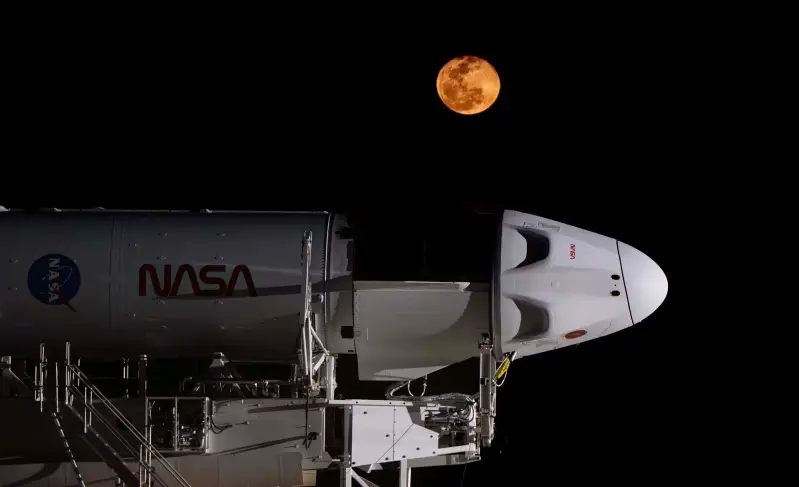
Credit SpaceX
Why ISS resupply mission updates matter beyond the headline
The immediate story is simple enough: food, water, experiments, spare parts and station equipment need to reach orbit. But the operational significance runs deeper. Every resupply mission is tied to crew timelines, maintenance planning, scientific output and contingency margins aboard the station.
When a cargo flight moves to the right on the calendar, it is not automatically a crisis. NASA and its partners build margin into station operations. Consumables are tracked carefully, and crews are not left one missed launch away from trouble. Still, repeated delays can force reprioritisation. Some hardware can wait. Some experiments cannot. Time-sensitive biological research, replacement components for life-support systems and payloads tied to visiting crew schedules all have different levels of urgency.
That is why the most useful ISS resupply mission updates are not just date changes. They explain what is on board, what slipped, what was removed from the manifest, and whether the issue sits with the rocket, the spacecraft, station traffic or weather at the launch site.
The vehicles behind current ISS resupply mission updates
The station’s cargo architecture works because it is diversified, not because every spacecraft does the same job. That distinction matters whenever one provider hits a technical snag.
SpaceX’s Dragon remains the standout in one key area: it can return significant cargo to Earth. That makes it especially valuable for completed experiments, failed hardware that needs post-flight inspection, and research samples that lose value if they stay in orbit too long. In practical terms, a Dragon mission affects both inbound and outbound station logistics.
Northrop Grumman’s Cygnus fills a different but equally important role. It delivers pressurised cargo efficiently and, after departure, is commonly used for destructive disposal. The spacecraft burns up in the atmosphere with station rubbish on board, which is useful in a way that tends to get overlooked outside specialist coverage. The ISS needs a regular waste-removal pipeline as much as it needs incoming supplies.
Russia’s Progress spacecraft continues to play a foundational role as well, carrying cargo, propellant and water while also supporting station orbit-raising tasks. That gives Progress missions a wider operational footprint than a simple supply run. If a Progress flight shifts, the knock-on effects can extend into propulsion planning and traffic management.
The result is a logistics system with redundancy, but not perfect interchangeability. If one Dragon mission slips, you cannot assume another vehicle can absorb the exact same cargo set without compromises. Return cargo, external payloads, powered lockers and hazardous materials all shape what can move and when.
Launch delays are common - but the reasons are what count
Cargo launches are exposed to the same broad categories of delay as any orbital mission: weather, pad availability, range conflicts, spacecraft checks and rocket-side technical issues. What separates a meaningful update from noise is the root cause.
A 24-hour weather scrub from Florida is one thing. A spacecraft avionics issue discovered during late processing is another. A station-side scheduling shift caused by a docked vehicle staying longer than planned tells a different story again. Each points to a different level of operational friction.
For readers tracking cadence, this is where context matters. A one-off scrub inside a healthy launch flow usually changes very little. A sequence of slips across several cargo providers can suggest tighter margins in the system, especially if those changes overlap with crew rotation flights, reboost planning or heavy maintenance periods on orbit.
What usually changes inside a cargo manifest
Cargo lists are often presented as fixed, but they are better understood as prioritised stacks. Some items are locked in early. Others can be reshuffled surprisingly late, particularly if launch dates move.
Crew provisions are obvious priorities, though they are rarely the most operationally sensitive because stock levels are managed with care. Scientific payloads can be more vulnerable to schedule shifts, especially if they are tied to cold-stowage limits, biological windows or crew activity plans already written into the station timetable.
Spare parts are where cargo updates become especially revealing. If a mission picks up additional hardware for environmental control, power systems or communications equipment, that can hint at emerging maintenance emphasis aboard the station. It does not necessarily mean something is failing, but it can show where programme managers want more resilience.
Late-load capability is another detail worth watching. Certain fresh food items, time-sensitive experiments and high-priority samples are loaded close to launch. If a mission scrubs after late loading, teams may face a more complicated recycle process. That is not always visible in headline coverage, but it often explains why a simple 24-hour delay can become longer.
How station traffic shapes resupply schedules
The ISS is busy infrastructure, not just a destination in orbit. Docking ports and visiting vehicle windows are finite, and mission planners are constantly balancing cargo flights with crew spacecraft, private astronaut missions and, at times, vehicle departures delayed by weather or technical checks on Earth.
This is where resupply coverage becomes more interesting than a straightforward launch report. A cargo mission may be ready to fly, yet still wait because the station timeline has shifted. Perhaps a crewed Dragon remains docked longer than expected. Perhaps a Progress arrival and reboost sequence takes priority. Perhaps robotic arm operations for berthing need to be replanned around crew sleep shifts and communications coverage.
Those constraints are not signs of disorder. They are what a mature orbital outpost looks like. But they do mean launch dates should always be read as provisional until the full chain - rocket, spacecraft, range, weather and station traffic - lines up.
Add comment
Comments