

A Falcon 9 rideshare launch can look simple on the surface - one rocket, one launch time, one result. In reality, it is often a tightly packed manifest of small satellites, orbital transfer vehicles and customer schedules, all moving on slightly different timelines. That is exactly why a SpaceX rideshare mission tracker matters. If you want more than a headline saying a Transporter mission is approaching, you need a way to read the moving parts without getting lost in the noise.
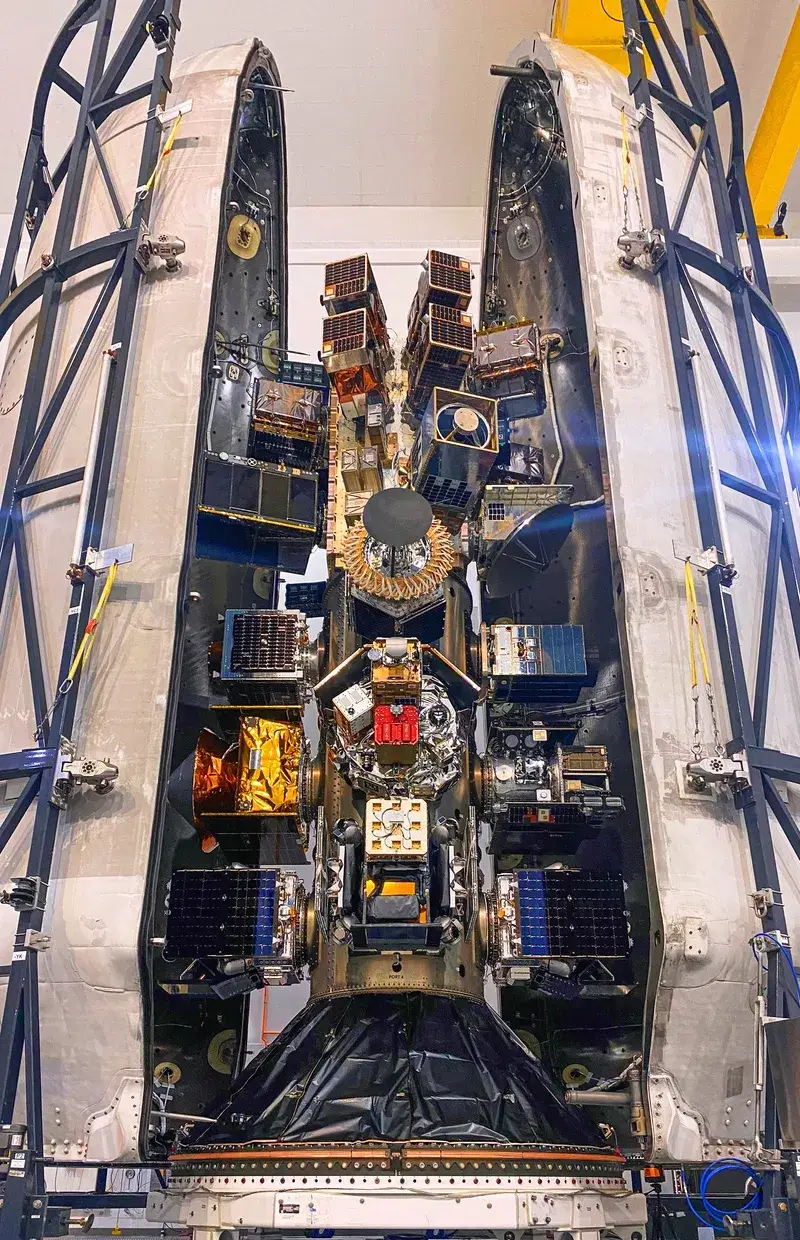
Credit SpaceX
SpaceX’s rideshare programme has changed the rhythm of smallsat access to orbit. Instead of waiting for a dedicated launch, many operators can buy a slot on a shared mission and reach space on a more predictable cadence. For readers following launch activity week by week, that creates a different tracking challenge from a standard commercial or government mission. The question is not just when Falcon 9 lifts off. It is which payloads are confirmed, which orbit is planned, whether deployment sequences have shifted, and what any delay means for dozens of customers at once.
What a SpaceX rideshare mission tracker should actually track
A useful tracker starts with the basics, but it cannot stop there. Launch date, launch site and vehicle are the foundation, yet rideshare missions demand more operational detail than a typical mission listing.
The first thing to watch is the mission identity itself. SpaceX generally flies these under the Transporter or Bandwagon banners, and that naming already tells you something about likely orbital profile and customer mix. Transporter missions have become closely associated with sun-synchronous and smallsat-heavy deployments, while Bandwagon missions have opened another lane for operators looking for different orbital options.
From there, the tracker should follow changes to schedule discipline. A listed month is not the same as a firm launch date, and a firm launch date is not the same as a pad-ready campaign. Readers who track launches closely know the difference matters. A mission can move because of weather, range availability, booster flow, payload readiness or congestion elsewhere in the manifest. On a rideshare mission, payload readiness is especially significant because one late customer does not always move the whole mission, but in some cases integration or sequencing issues can force adjustments.
A serious tracker should also identify the payload picture as clearly as possible. That does not mean pretending every customer is publicly confirmed months in advance. It means distinguishing between announced payloads, likely participants and unconfirmed reports. This is where the strongest launch coverage separates itself from speculation-heavy chatter.
Reading schedule changes in the SpaceX rideshare mission tracker
Not every slip means trouble, and not every unchanged date means everything is on track. That sounds obvious, but it is where a lot of casual mission watching goes wrong.
When a rideshare mission moves by a few days, the most likely explanation is ordinary launch operations. SpaceX runs a dense manifest, and a small shift can reflect range coordination, turnaround at the launch site or the knock-on effect of another Falcon 9 assignment. If the move stretches into weeks or months, the picture becomes more interesting. At that point, readers should start looking at customer readiness, export approvals, final integration timing and whether orbital requirements are changing.
For small satellite operators, rideshare is cost-efficient but less flexible than a dedicated flight. That trade-off shows up in tracking data. Customers gain access to lower prices and regular launch opportunities, but they accept less control over the exact mission timeline and orbital fine-tuning. So when the tracker updates, it is worth asking not only what changed, but who is most affected by the change.
Why deployment details matter more than most headlines suggest
On a crewed mission or a major national security launch, the key event is obvious. On a rideshare mission, success unfolds in stages. Liftoff is only the opening act.
That is why deployment windows deserve close attention in any SpaceX rideshare mission tracker. Falcon 9 may insert the stack successfully, but the operational story continues through dispenser releases, orbital transfer vehicle separations and customer confirmation of signal acquisition. For missions carrying dozens of spacecraft, deployment order can matter a great deal. It affects early mission operations, collision avoidance planning and the timing of when each operator can declare initial success.
This is also where public visibility becomes uneven. SpaceX may confirm the broad deployment sequence, but individual customers often report their own milestones separately. Some publish first contact within hours. Others stay quiet until internal checks are complete. For readers, that means a launch marked successful on the day is not always the end of the tracking cycle. A good tracker stays alive after launch and follows post-deployment updates where available.
The data points that tell you whether a mission is really progressing
There are a few signals experienced launch watchers tend to prioritise. Static fire activity, fairing and booster assignments, range notices and pad flow all help sharpen the picture. None is perfect on its own, but together they reveal whether a mission is moving from placeholder status to a real campaign.
Booster assignment can be especially useful because it places the launch inside SpaceX’s wider operational machine. If a rideshare mission has a likely first-stage booster lined up, readers can start reading turnaround expectations and recent fleet usage with more confidence. That said, booster assignment is not always stable until late in the campaign, particularly when other launches are competing for hardware.
Payload disclosures matter too, but with caution. Not every customer wants publicity ahead of launch, and not every reported payload remains on the final manifest. That is why strong reporting should treat customer lists as fluid until close to flight. The closer the mission gets to encapsulation, the firmer the picture usually becomes.
Transporter, Bandwagon and what they signal to readers
It is tempting to treat all SpaceX rideshare launches as interchangeable, but they are not. Mission family tells you something about market demand and where SpaceX sees room to expand.
Transporter established the baseline model: high-volume shared launches that gave the smallsat market a repeatable path to orbit. The effect has been bigger than launch count alone suggests. A repeatable rideshare cadence changes planning for satellite manufacturers, Earth observation firms, university teams and in-orbit services companies. It lowers one barrier while exposing another - operators still need to fit mission constraints, orbital timing and downstream commissioning plans.
Bandwagon points to a more tailored approach. It suggests SpaceX is not only filling rockets with surplus capacity, but actively shaping products around customer demand. For industry observers, that is worth tracking because it shows how launch providers are segmenting the market. The more precisely SpaceX can package orbital access, the harder it becomes for competitors to win business on flexibility alone.
What a tracker cannot tell you by itself
Even the best mission tracker has limits. It can show launch timing, known payloads and status changes, but it cannot always reveal the private reasons behind a schedule move or payload swap. Commercial customers do not disclose everything, and they rarely do it on the same timeline as public launch reporting.
That means readers should resist overreading every gap in the public record. A missing payload announcement does not automatically mean a customer dropped out. A late date change does not automatically signal a technical issue. In launch coverage, certainty often arrives later than interest does.
For the same reason, the most reliable approach is to treat a SpaceX rideshare mission tracker as a live operational picture rather than a fixed document. It should be updated, interpreted and read alongside the broader cadence of Falcon 9 activity. One mission rarely moves in isolation.
Why rideshare tracking has become a core part of launch coverage
Rideshare missions are no longer a side story in commercial spaceflight. They are part of the infrastructure now. They reveal demand in the smallsat market, show how efficiently SpaceX is using launch capacity and offer a running indicator of how accessible orbit has become for newer entrants.
For a publication built around launch rhythm and mission status, that makes these flights especially valuable to follow. They combine hard schedule data with a wider industry signal. If a Transporter mission fills quickly, if a Bandwagon mission attracts a broader customer base, or if deployment activity becomes more complex, those are not just launch notes. They are indicators of where the commercial launch market is heading.
The most useful readers’ habit is simple: track the mission before launch, during countdown and well after separation events begin. That is where the real story sits. In spaceflight, especially on a packed Falcon 9 rideshare, the headline is only the start of the traffic report.
Add comment
Comments