

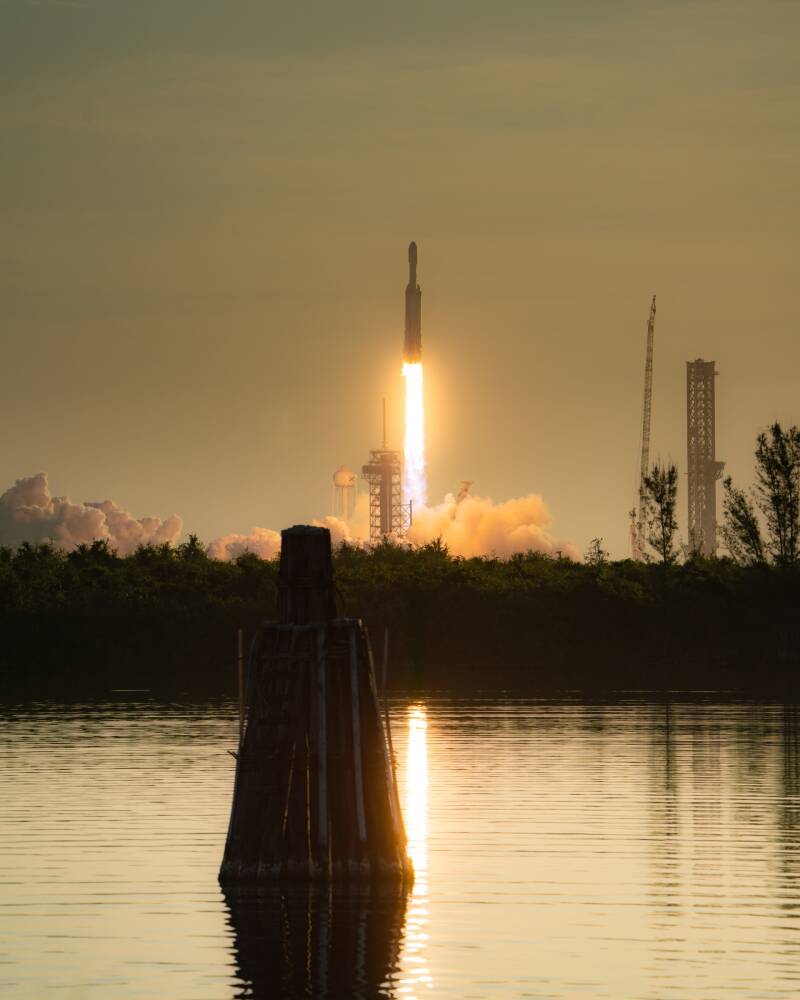
Photo by : Dhanushka Nilanga
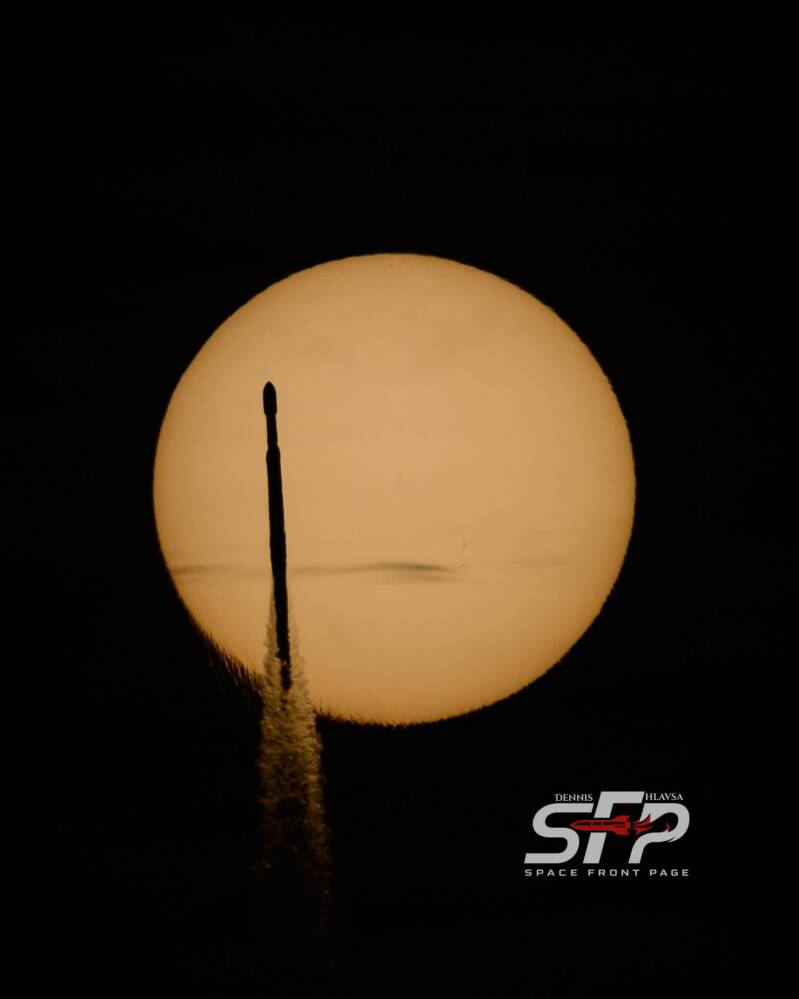
Photo by : Dennis Hlavsa
NASA has officially expanded humanity's cosmic window. Blasting off on a SpaceX Falcon Heavy rocket from the Kennedy Space Center in Florida, the Nancy Grace Roman Space Telescope has successfully taken flight, embarking on a landmark mission to decode the universe's most elusive mysteries.
Named in honor of NASA’s first chief astronomer—widely celebrated as the "Mother of Hubble"—the tour bus-sized observatory represents a monumental shift in how we survey the cosmos. While celebrated telescopes like Hubble and the James Webb Space Telescope excel at staring deeply into narrow, specific patches of the sky, Roman is built for scale. Equipped with a massive primary mirror and a wide-field infrared camera, its field of view is more than 100 times greater than Hubble's, allowing it to capture sweeping panoramas of space with unprecedented speed.
"Where Webb goes deep, Roman will go big," noted Julie McEnery, Roman project scientist at NASA.
The $4.3 billion mission targets two of modern astrophysics' greatest head-scratchers: dark energy and dark matter. Together, these unseen forces are believed to make up roughly 95% of the universe—with normal matter, including all visible stars, planets, and gas, accounting for a mere 5%. By charting the precise shapes, distributions, and movements of billions of galaxies across vast cosmic distances, Roman will construct the most comprehensive 3D map of the universe ever attempted, helping scientists understand how dark energy drives the accelerating expansion of space.
Beyond cosmology, the telescope is poised to transform our understanding of planetary systems. Utilizing advanced wide-field surveys and a technique called gravitational microlensing, astronomers expect Roman to discover tens of thousands—potentially upwards of 100,000—new exoplanets orbiting distant stars. Furthermore, the spacecraft carries an experimental technological demonstration: a coronagraph instrument designed to artificially block out blinding starlight, opening the door to direct imaging of alien worlds.
Having cleared Earth's atmosphere without a hitch, Roman is currently charting a course toward its final destination: the second Sun-Earth Lagrange point (L2), located roughly one million miles away. The journey will take a little over three months, during which mission controllers will carefully calibrate the telescope's instruments and systems.
If all goes according to plan, Roman will begin beaming its groundbreaking streams of data back to Earth early next year. As NASA leadership proclaimed following the successful morning liftoff, the mission is set to kick the door wide open on a new era of astronomical discovery—not only answering longstanding questions about our place in the universe, but uncovering wonders we have yet to even imagine
Article By : Dhanushka Nilanga
Add comment
Comments