

SpaceX’s recovery of Starship Ship 40 retrieved intact from the Indian Ocean after its gentle splashdown one month ago has become one of the most significant milestones in the Starship program to date. The event marks the first time an upper stage of Starship has survived atmospheric re‑entry and ocean landing without breaking apart, giving engineers an unprecedented opportunity to inspect a flown vehicle and accelerate development toward full reusability.
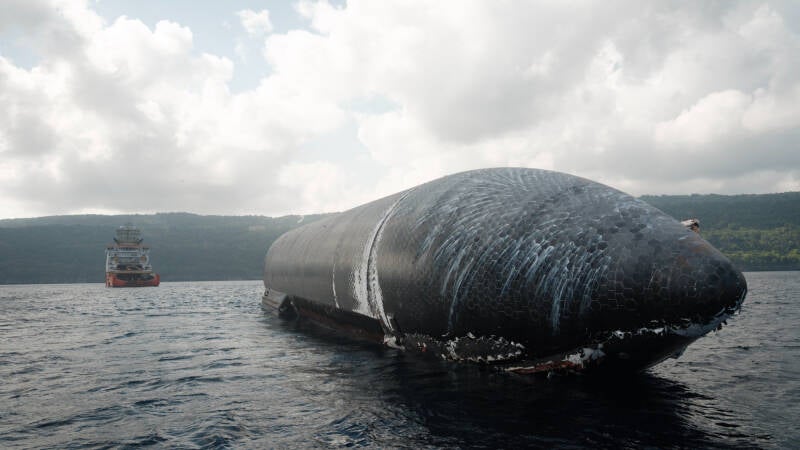
Ship40 arrive at the Christmas Island: Credit SpaceX
🌍 A Historic Splashdown
Ship 40 completed Starship Flight 13 on July 24, 2026, launching from Starbase, Texas. During the mission, it deployed 20 Starlink V3 satellites, successfully performed an in‑space Raptor engine relight, and executed a controlled re‑entry sequence. The spacecraft then performed a soft splashdown in the Indian Ocean, remaining buoyant and structurally intact—something no previous Starship upper stage had achieved.
🚢 Weeks Adrift and a Challenging Recovery
After splashdown, Ship 40 drifted for days across the Indian Ocean. Recovery teams faced rough seas and difficult towing conditions, at times prompting Musk to say the effort was “not looking good.” Despite this, vessels including Go Australis, Normand Ranger, and Skimmer Tide eventually secured the spacecraft.
By August 18, 2026, the vehicle reached calmer waters near Christmas Island, where SpaceX engineers began detailed inspections of the heat shield, engine section, and structural components. These close‑up examinations provide rare data that could influence future Starship upgrades.
🔧 Why Ship 40 Matters
Starship’s long‑term goal is full and rapid reusability—both booster and upper stage. Ship 40’s intact recovery offers:
-
Heat shield performance data from real atmospheric re‑entry
-
Engine section inspection after in‑space relight
-
Structural integrity insights from ocean landing
-
Validation of redesigns introduced after earlier test flights
This recovery is a major step toward proving that Starship’s upper stage can survive return from orbit and be refurbished for future missions.
🚀 What Comes Next
SpaceX plans to transport Ship 40 back to Starbase, Texas, via sea for deeper analysis. The company hopes that lessons learned from this recovery will accelerate development toward fully reusable Starship missions, including cargo flights, lunar landings, and future Mars expeditions.
🛰️ A Turning Point for Starship
The successful splashdown and recovery of Starship 40 demonstrate that SpaceX is steadily overcoming the engineering challenges of returning a massive spacecraft from space intact. As the company continues refining its design, Ship 40 may be remembered as the first Starship to prove that reusability for super‑heavy spacecraft is not just possible but imminent.
Add comment
Comments