

A SpaceX Falcon 9 rocket blasted off from Florida early Saturday morning, sending a heavily loaded cargo spacecraft toward the International Space Station before executing a flawless booster landing just minutes later. The rocket lifted off at 7:41 a.m. EDT (1141 GMT) from Cape Canaveral Space Force Station, carrying Northrop Grumman’s upgraded Cygnus XL resupply freighter on a critical supply mission known as NG-24. The launch marked the 24th commercial resupply mission by Northrop Grumman to support NASA’s orbiting laboratory.
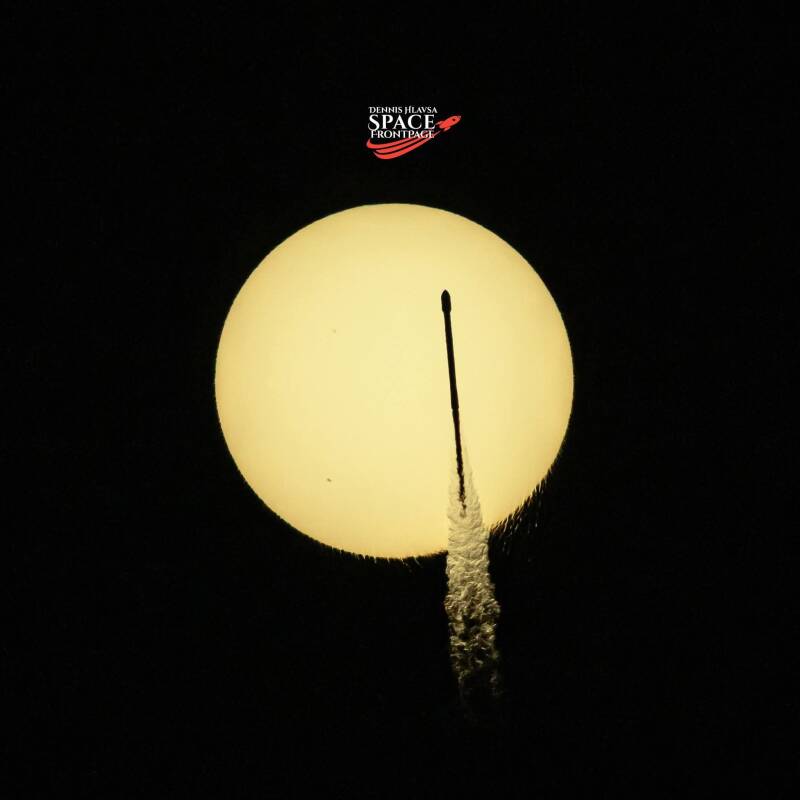
Falcon9 Liftoff, credit Dennis Hlavsa for SpaceFrontpage
During live coverage, NASA commentators confirmed the spacecraft—dubbed the S.S. Steven R. Nagel—is named after former astronaut Steven R. Nagel, who flew four space shuttle missions and logged more than 720 hours in space. Nagel, a former U.S. Air Force test pilot, served with NASA from 1979 to 1995, flying as a mission specialist, pilot, and later commander. He passed away in 2014 at the age of 67 after a prolonged illness.
The Cygnus XL spacecraft is carrying approximately 11,000 pounds (nearly 5 metric tons) of cargo, including scientific experiments, crew provisions, and essential equipment for astronauts aboard the ISS. The “XL” designation reflects its expanded cargo capacity, a significant upgrade over earlier Cygnus models that carried about 8,500 pounds.
The spacecraft is expected to arrive at the ISS on April 13, where it will be captured using the station’s Canadarm2 robotic arm and berthed to the orbiting outpost.
Saturday’s mission also showcased SpaceX’s hallmark reusability. The Falcon 9 first-stage booster—flying for the seventh time—successfully returned to Earth roughly eight minutes after liftoff, touching down at a landing zone near the launch site. The same booster has previously supported a range of missions, including astronaut flights and earlier cargo deliveries, underscoring the company’s rapid reuse capability.
Just over 14 minutes after launch, the Cygnus spacecraft separated from the Falcon 9 upper stage and entered its initial orbit. It is scheduled to deploy its solar arrays about an hour after liftoff, continuing its automated journey to rendezvous with the ISS.
Cygnus is one of four robotic cargo vehicles that regularly service the station, alongside Japan’s HTV-X, Russia’s Progress spacecraft, and SpaceX’s Dragon capsule. Among these, Dragon remains the only reusable cargo spacecraft, while the others—including Cygnus—are designed to burn up in Earth’s atmosphere at the end of their missions.
This flight marks only the second mission for the upgraded Cygnus XL variant. Its predecessor launched last September and remained attached to the ISS for six months before safely disposing of waste during a controlled reentry in March.
The NG-24 mission continues a vital supply chain that enables long-duration human presence aboard the ISS. From cutting-edge scientific research to everyday necessities, cargo missions like this one ensure astronauts can live and work in space while advancing knowledge that benefits life on Earth.
With another successful launch and landing, SpaceX and its partners have once again demonstrated the reliability and efficiency of modern commercial spaceflight—keeping the ISS fully supplied as humanity pushes further into orbit and beyond.

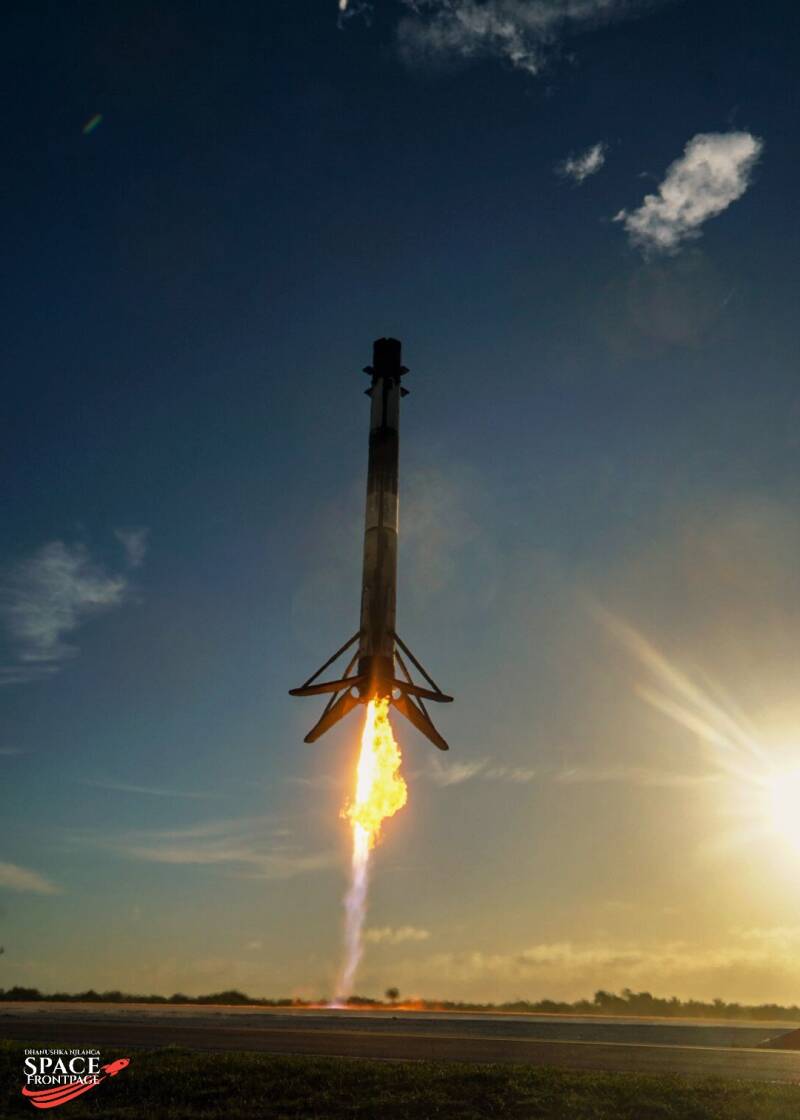
Falcon9 Landing at the landing zone 40, photos credit Dennis Hlavsa and Danushka Nilanga for SpaceFrontpage
Add comment
Comments