

Rocket Lab opened its 2026 launch manifest with a successful Electron mission from New Zealand, marking another milestone for the small-satellite launch provider. An Electron rocket lifted off from Rocket Lab’s Launch Complex 1 on the Māhia Peninsula at 5:52 a.m. EST on Jan. 22 (1052 GMT; 11:52 p.m. local time), carrying two satellites for European satellite company Open Cosmos. Roughly 70 minutes after liftoff, Electron’s kick stage deployed the spacecraft into a circular orbit about 1,050 kilometers above Earth, meeting all primary mission objectives.
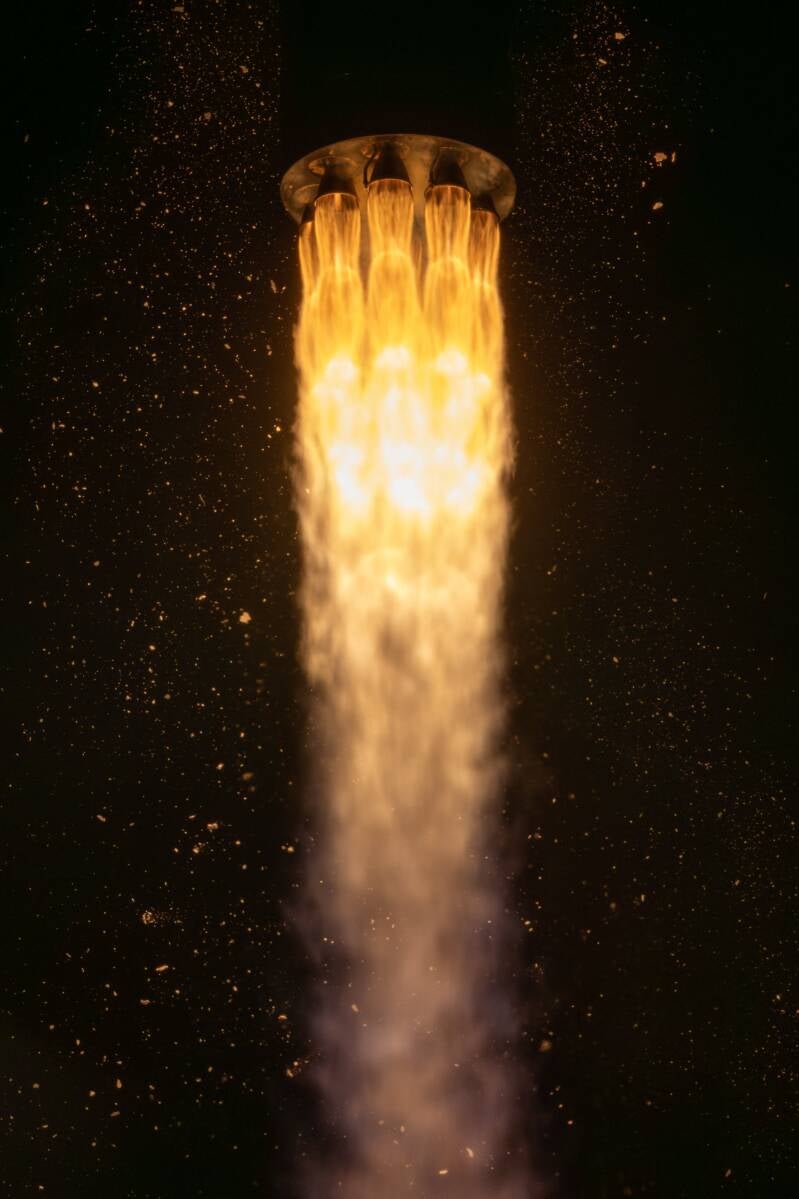

Electron on its way to orbit for its 80th launch with mission success for Open Cosmos
The flight, dubbed “The Cosmos Will See You Now,” was Rocket Lab’s first dedicated launch for Open Cosmos and placed the initial pair of satellites for the company’s planned low Earth orbit telecommunications constellation. Open Cosmos specializes in designing, building, and operating satellites, while also providing data-sharing and analytics services aimed at simplifying access to Earth observation data.
According to Open Cosmos, its model is designed to reduce mission cost, complexity, and timelines, while opening satellite data access to a broader range of customers, including organizations outside the traditional space sector.
Rocket Lab said the new constellation will complement Open Cosmos’ existing satellites already on orbit, which provide high-resolution imagery and global monitoring. The additional spacecraft are expected to enhance coverage and deliver valuable metadata to support a wide range of commercial, environmental, and societal applications.
The launch marked Rocket Lab’s 80th mission overall, the majority flown by its 18-meter-tall Electron rocket, which offers dedicated rides for small satellites to orbit. The company has also used its suborbital HASTE variant for hypersonic technology testing.
Rocket Lab enters 2026 following a record-setting year in 2025, when it conducted 21 launches—surpassing its previous annual high of 16 missions achieved in 2024.
Add comment
Comments