

SpaceX’s Starship Flight 15 marked one of the most significant milestones in the development of the world's largest and most powerful rocket system. The mission combined orbital operations, the deployment of next-generation Starlink satellites, an extended flight around Earth, and a historic attempt to recover the Starship upper stage at Starbase.
Flight 15 was more than just another test flight. It represented a major step toward SpaceX’s long-term objective of making Starship rapidly reusable, dramatically reducing the cost of access to space, and eventually enabling large-scale missions to the Moon, Mars, and beyond.
The flight demonstrated how SpaceX is evolving Starship from an experimental launch vehicle into a system designed to perform repeatable orbital missions with the possibility of recovering both stages.
1. A new chapter for Starship
Starship Flight 15 was designed around a series of ambitious objectives that went far beyond simply reaching space. SpaceX aimed to demonstrate a more advanced operational profile, including the deployment of 26 Starlink V3 satellites, an approximately 14-orbit journey around Earth, and a return of Ship 42 to Starbase for a catch attempt.
The mission also represented a new phase of Starship development, with SpaceX increasingly focused on recovery, refurbishment, and reflight rather than simply testing individual flight capabilities.
The Flight 15 mission profile was planned to last more than 22 hours, with Starship operating at an orbital altitude of approximately 275 kilometres before beginning its return journey.
2. Liftoff of Booster 22 and Ship 42
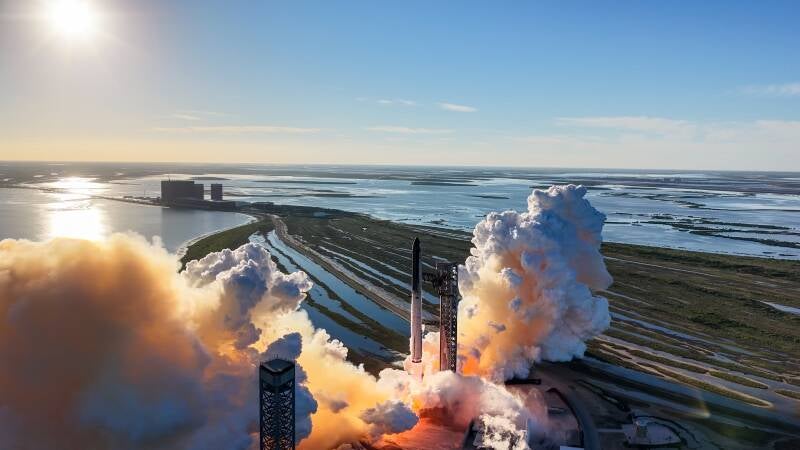
The launch of Booster 22 and Ship 42 marked the beginning of an ambitious mission. Both vehicles successfully powered through the initial ascent phase, with the Super Heavy booster providing the enormous thrust needed to push the fully stacked Starship system through Earth's atmosphere.
The launch showcased the combined power of Super Heavy's 33 Raptor engines, which operate together to generate the thrust required to lift the massive launch vehicle.
During ascent, the vehicle passed through Max Q, the point of maximum aerodynamic pressure, before continuing toward stage separation.
The successful liftoff and ascent demonstrated the continued progress of the Starship launch system and its ability to execute increasingly complex flight profiles.
3. Successful stage separation and the Super Heavy return
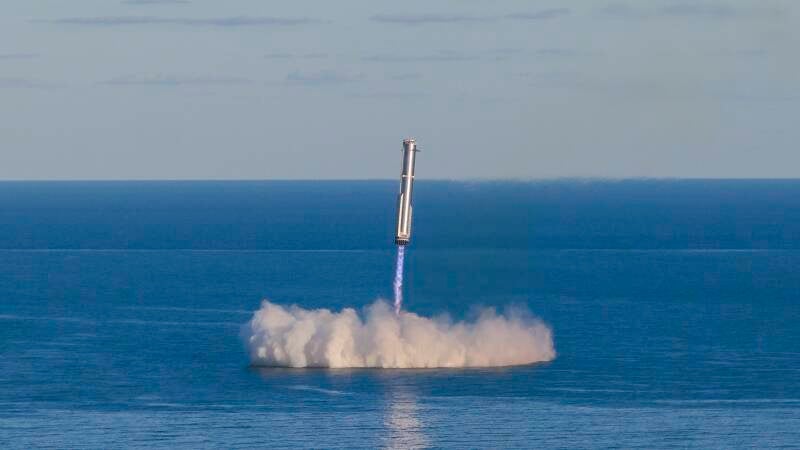
During the boostback sequence, a low-fuel-mass alarm caused the burn to end earlier than expected. The booster subsequently determined that it was not in the appropriate position for a safe catch and autonomously diverted from the planned recovery approach.
Rather than attempting an unsafe landing at the tower, Booster 22 completed a successful splashdown in the Gulf.
Although the booster catch was not achieved, the flight provided valuable operational information about fuel margins, boostback performance, guidance decisions, and the autonomous recovery system.
The decision to divert rather than attempt a catch demonstrated the importance of the vehicle's safety logic, which is designed to prioritize a safe outcome when recovery conditions are no longer suitable.
4. Ship 42 reaches orbit and begins its mission
During this time, SpaceX was able to evaluate Starship's performance in the space environment, monitor vehicle systems, and prepare for the eventual return to Starbase.
The extended mission duration was particularly important because Starship is intended to support missions that require far more than a few minutes of flight. Future Starship missions could involve orbital transportation, satellite deployment, lunar operations, and eventually interplanetary travel.
Flight 15 helped advance the technologies needed for those ambitions.
5. Deployment of 26 Starlink V3 satellites
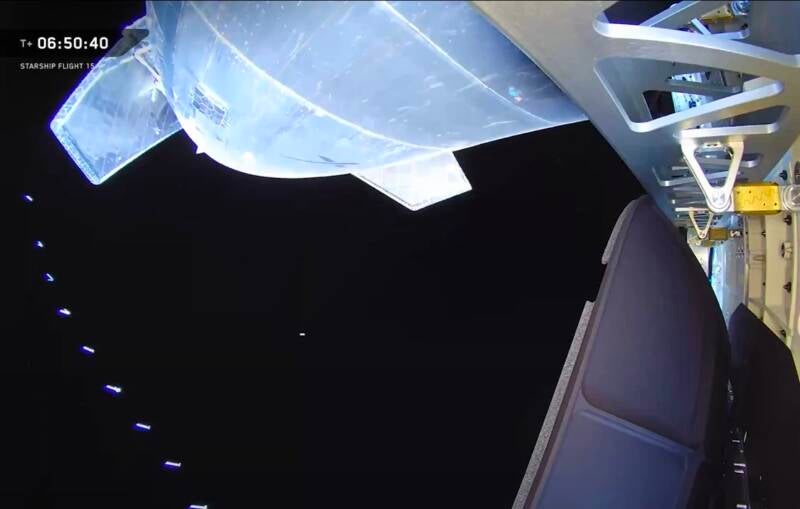
One of the most important objectives of Flight 15 was the deployment of 26 Starlink V3 satellites.
Unlike traditional satellite deployment missions that rely on smaller launch vehicles and limited payload capacity, Starship is designed to carry much larger payloads in a single launch.
The deployment of 26 Starlink V3 satellites represented a major demonstration of Starship's potential role in the future expansion of SpaceX's satellite network.
According to SpaceX's mission description, each Starlink V3 satellite is expected to add approximately 1 terabit of capacity to the constellation. Together, the 26 satellites represent a substantial increase in network capacity.
After deployment, the satellites begin their own operational process:
●Solar arrays deploy to provide electrical power.
●Antennas unfold to prepare for communications.
●Initial communications are established with ground systems and the Starlink network.
●Orbit raising begins using onboard propulsion.
●System checkouts are completed before the satellites enter operational service.
The mission demonstrated the potential of Starship to dramatically increase the number and size of satellites that can be deployed in a single launch.
This capability could become one of the most important advantages of Starship, particularly as SpaceX continues to develop its next-generation Starlink infrastructure.
6. A 22.5-hour journey around Earth
Ship 42 spent approximately 22.5 hours in space, completing around 14 orbits of Earth.
During the mission, SpaceX monitored the vehicle's systems and assessed whether conditions were suitable for the return-to-launch-site profile.
The extended duration made Flight 15 significantly different from a conventional launch test. Instead of simply launching and returning within minutes, Starship operated in space for nearly an entire day before beginning its descent.
This type of flight profile is essential for developing a spacecraft capable of performing more complex missions in the future.
7. Heat shield testing and reentry preparations
For Flight 15, SpaceX continued its heat shield development program, incorporating improvements from earlier flights.
The mission included heat shield monitoring and evaluation, with additional instrumentation and camera-equipped Starlink satellites intended to provide imagery and data to help assess the heat shield during flight.
SpaceX has been testing improvements involving tile retention, areas where plasma could potentially penetrate behind tiles, and redesigned tile geometry intended to reduce heating between tiles.
These developments are part of a broader effort to make Starship's thermal protection system more robust and capable of supporting repeated flights.
For a fully reusable spacecraft, the heat shield must not only survive reentry but also be inspected, repaired, or refurbished efficiently enough to support frequent missions.
8. The historic return of Ship 42 to Starbase
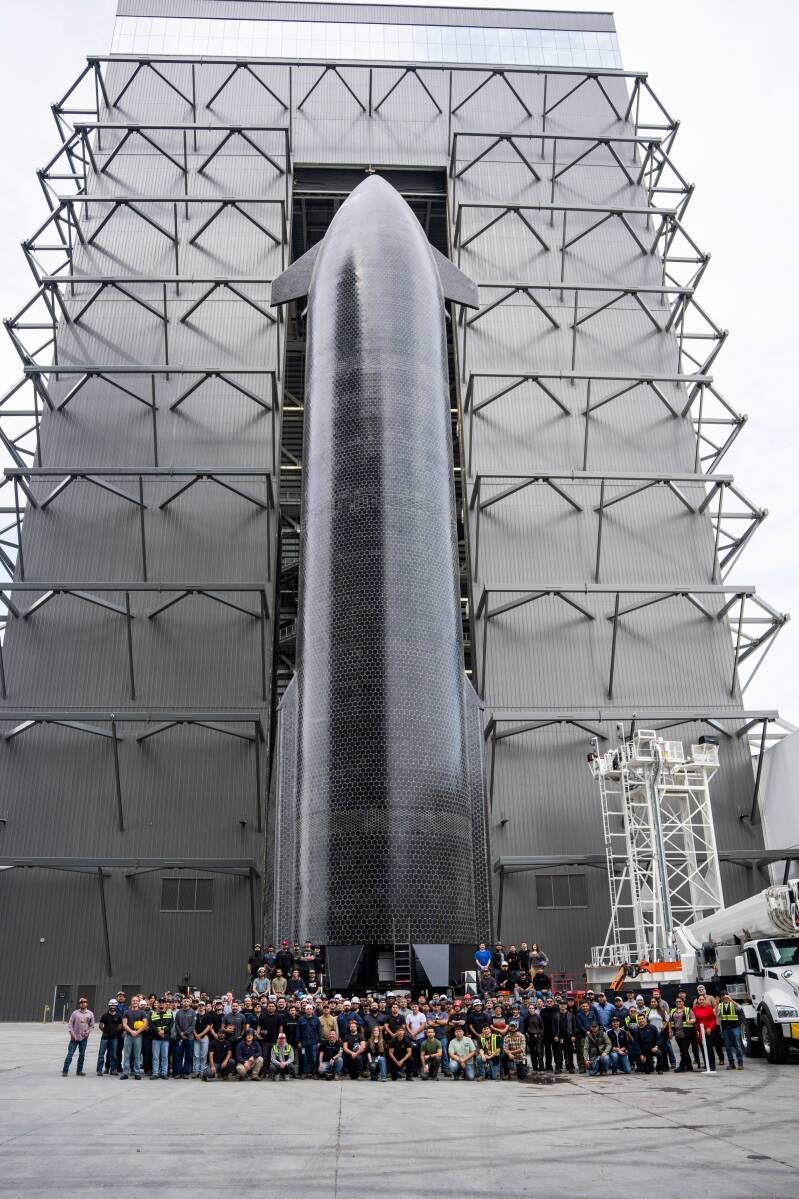
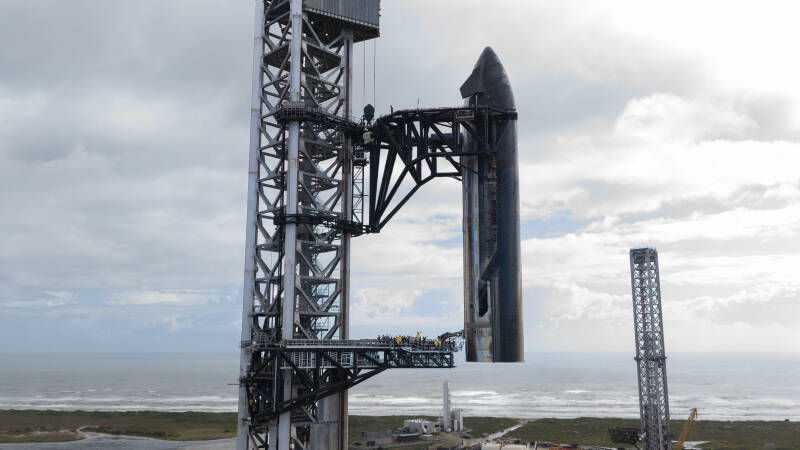
One of the most ambitious objectives of Flight 15 was the return of Ship 42 to Starbase for a catch attempt.
After completing its orbital mission, Ship 42 began its return trajectory toward the launch site.
The spacecraft entered Earth's atmosphere, transitioned through the hypersonic phase, and continued its descent toward Starbase.
The vehicle then performed its landing maneuver, including the flip maneuver and final landing burn, before being caught by the launch tower's mechanical arms.
Ship 42's successful catch represented a major milestone in Starship development.
This was an important demonstration of SpaceX's approach to reusable launch systems.
Rather than recovering the spacecraft in the ocean, transporting it back to a launch facility, and preparing it for another flight, SpaceX aims to catch the vehicle directly at the launch tower.
The tower catch system is designed to allow the vehicle to be secured, inspected, and potentially reintegrated into the launch infrastructure with significantly fewer recovery and transportation steps.
The successful Ship 42 catch demonstrated the progress of the system and moved Starship closer to the goal of full rapid reusability.
9. Why the tower catch matters
The tower catch system is one of the most distinctive elements of SpaceX's Starship architecture.
The mechanical arms are designed to capture the returning spacecraft and Super Heavy booster, allowing the launch system to potentially eliminate the need for traditional landing legs and separate recovery infrastructure.
●Reduced recovery operations: Vehicles can be captured directly at the launch site.
●Reduced transportation requirements: The rocket does not need to be moved from a remote landing location.
●Faster turnaround: The vehicle could potentially be inspected and prepared for another mission more quickly.
●Infrastructure integration: Recovery and launch operations could be integrated into a single system.
●Lower operational costs: Repeated reuse could eventually reduce the cost per launch.
The ultimate goal is not simply to catch a rocket once. SpaceX wants to develop a system in which both Starship and Super Heavy can repeatedly launch, return, and be prepared for another flight.
Flight 15 was an important step toward demonstrating that concept.
10. Booster 22's missed catch: a setback, but valuable data
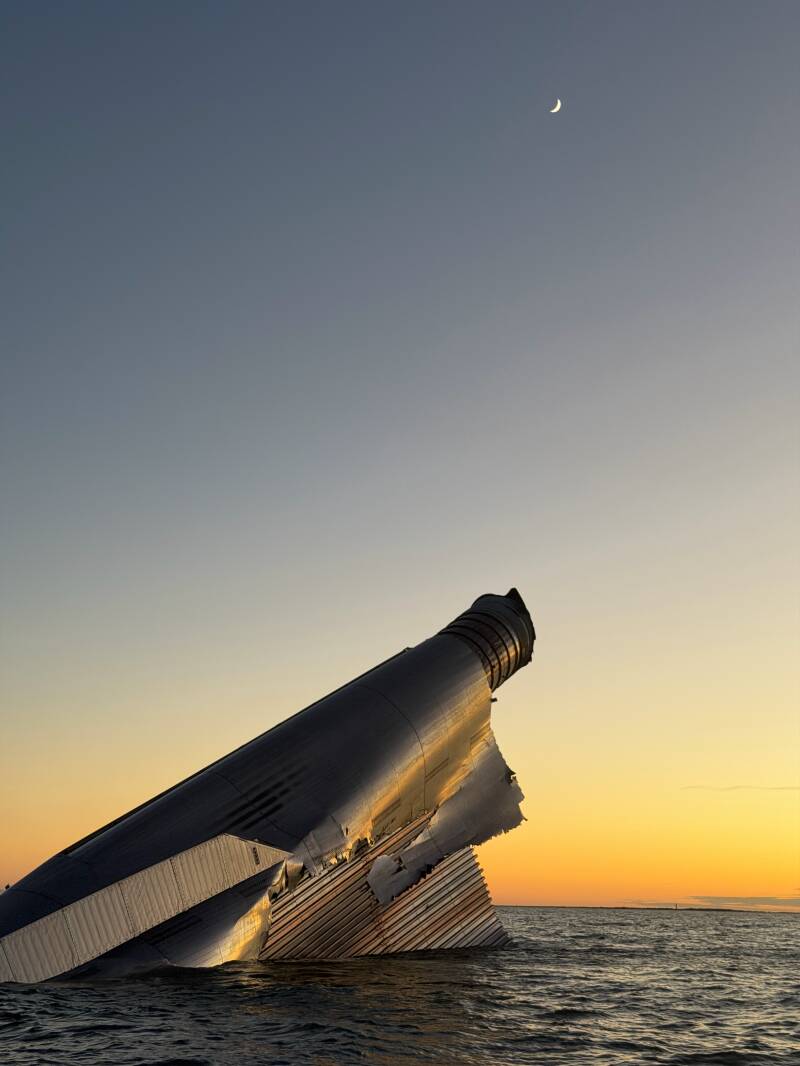
While Ship 42's return was a major success, Booster 22 did not complete the planned tower catch.
The boostback burn ended earlier than planned after a low fuel mass alarm. The booster then autonomously determined that it was not in the correct position for the catch attempt and diverted to a safe splashdown in the Gulf.
Although this was not the recovery outcome SpaceX originally hoped for, it provided an important opportunity to analyze the booster’s flight performance and recovery logic.
Reusable rocket development involves managing extremely complex operations, including:
●Fuel and oxidizer reserves.
●Engine performance.
●Flight trajectory.
●Guidance and navigation.
●Autonomous decision-making.
●Recovery maneuver timing.
●Safety margins.
A recovery system must be capable of making decisions in real time, particularly when a vehicle is operating under conditions that differ from the expected flight profile.
Booster 22's decision to divert instead of attempting an unsafe catch illustrates how autonomous recovery systems can prioritize safety over completing the planned maneuver.
The data gathered from the mission could help improve future booster recovery attempts.
11. Flight 15 and the future of Starship V4
Flight 15 also arrives at a time when SpaceX is preparing to evolve Starship into more advanced configurations.
The next generations of Starship are expected to incorporate improvements in propulsion, vehicle design, payload capability, operational efficiency, and reusability.
The broader development program is moving toward a system capable of supporting:
●Large-scale Starlink deployments.
●Commercial satellite launches.
●Orbital transportation.
●Lunar missions.
●NASA's Artemis lunar architecture.
●Cargo delivery to the Moon.
●Eventually, crewed missions to Mars.
Starship's development is not limited to achieving orbit. SpaceX is attempting to build a spacecraft and launch system that can operate at a much higher flight cadence than traditional expendable rockets.
Flight 15 demonstrated several elements that are essential to that vision: orbital operations, satellite deployment, an extended mission, and the recovery of the upper stage.
12. The bigger picture: building a fully reusable space transportation system
Starship Flight 15 should be viewed as part of a much larger engineering effort.
SpaceX is developing a system where the launch vehicle, spacecraft, recovery infrastructure, satellite deployment capabilities, and operational processes work together.
The long-term objective is to transform space transportation into something closer to a reusable transportation service.
In traditional rocket operations, most launch vehicles are discarded after flight. Even reusable systems often require extensive recovery operations, refurbishment, and preparation between missions.
Starship's architecture seeks to change that model. By recovering both stages, deploying large payloads, and integrating the vehicles directly into launch infrastructure, SpaceX hopes to eventually achieve a level of operational efficiency that would make frequent spaceflight possible.
Flight 15 did not achieve every objective. Booster 22 did not return for a tower catch. But Ship 42's orbital mission, satellite deployment, extended flight, and successful return and catch represent meaningful progress.
Conclusion: Flight 15 moves Starship closer to operational reusability
Starship Flight 15 was a landmark mission in the evolution of SpaceX's next-generation launch system.
The successful launch of Booster 22 and Ship 42, stage separation, orbital operations, deployment of 26 Starlink V3 satellites, approximately 14 orbits around Earth, and Ship 42's return to Starbase for a successful catch all demonstrated the growing capabilities of the Starship program.
Booster 22's missed catch was an important reminder that the development of a fully reusable launch system remains a complex engineering challenge. But the mission also provided valuable data that could help SpaceX improve future recovery operations.
Flight 15 was not simply about getting Starship to space. It was about demonstrating that a giant orbital spacecraft could perform a complex mission, deploy its payload, return from orbit, and be caught at its launch site.
Each successful milestone brings SpaceX closer to its vision of rapid, fully reusable space transportation.
And if that vision eventually becomes reality, Starship could fundamentally change how humanity launches satellites, explores the Moon, and approaches the journey to Mars.
Add comment
Comments