

For space enthusiasts, SpaceX is usually experienced through spectacular launches, synchronized booster landings, and ambitious talk of Mars. Yet beneath the visuals lies a financial structure that is just as transformative as the technology itself. The story of SpaceX’s money is inseparable from the story of Elon Musk’s fortune, because the company’s strategy, risk appetite, and long-term goals are tightly bound to how Musk has chosen to build and deploy his wealth.
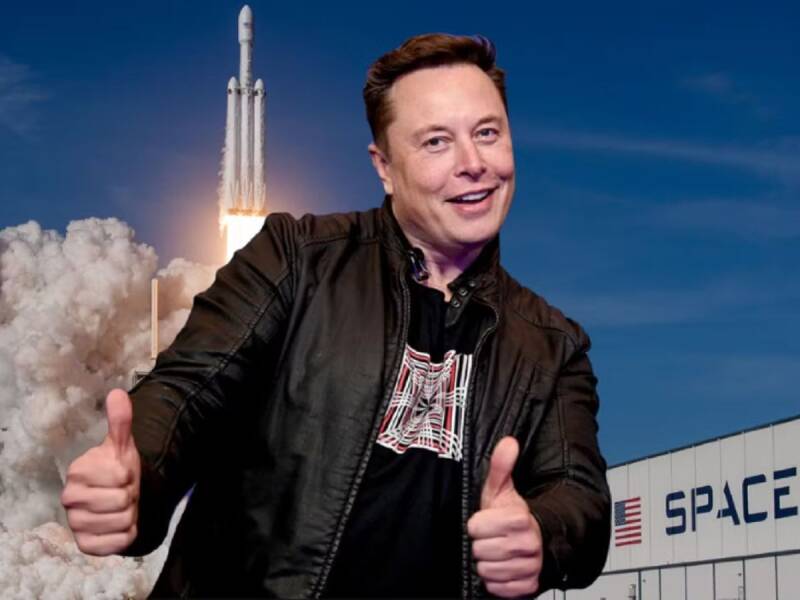
When SpaceX was founded in 2002, it was far from the financial powerhouse it is today. The company spent its early years burning through cash while developing the Falcon 1, and three consecutive launch failures nearly ended the venture. By 2008, SpaceX was weeks away from bankruptcy, a period Musk has often described as the most precarious of his career, especially since Tesla was facing its own existential crisis at the same time. The turning point came when Falcon 1 finally reached orbit and, crucially, when NASA awarded SpaceX a Commercial Orbital Transportation Services contract. That agreement, followed by regular cargo resupply missions to the International Space Station, gave SpaceX stable, predictable revenue and validated it as a serious aerospace provider.
From there, SpaceX’s finances began to strengthen steadily. Falcon 9 launches for commercial satellite operators, NASA, and U.S. national security customers became a reliable source of income. What truly changed the economics, however, was reusability. By landing and reflown boosters, SpaceX lowered its internal launch costs while maintaining competitive prices, allowing it to dominate the global launch market. This combination of high flight rates and reduced marginal costs turned launches from a risky experiment into a consistent cash-generating business.
Over time, though, launches ceased to be the whole story. SpaceX deliberately expanded beyond being a pure launch provider, building a vertically integrated space company. Government contracts for crewed missions, cargo flights, and lunar development brought in long-term funding while sharing technical risk with NASA and the U.S. military. At the same time, SpaceX embarked on Starlink, a satellite internet constellation that required enormous upfront investment but promised recurring revenue on a global scale. Today, Starlink is widely seen as the financial backbone of SpaceX’s future, capable of generating steady cash flow that could eventually dwarf launch revenue and fund more ambitious exploration goals.
The most aggressive and expensive bet SpaceX is making is Starship. From a traditional aerospace accounting perspective, Starship looks extreme: rapid prototyping, frequent test failures, and vast spending on engines, infrastructure, and manufacturing. But SpaceX’s financial model is not designed around short-term efficiency. Starship is intended to fundamentally change the cost structure of spaceflight by enabling full reusability and unprecedented payload capacity. If it succeeds, it could make large-scale satellite deployment, sustained lunar operations, and eventual Mars missions economically viable. In that sense, Starship is less a product than a long-term infrastructure investment.
That brings us to the latest financial milestone that captures how intertwined Elon Musk’s wealth is with SpaceX. In December 2025, Musk became the first individual in history to reach a net worth of $600 billion, according to estimates from Forbes and multiple financial indexes. This landmark was driven in large part by the soaring valuation of SpaceX, which is now estimated at around $800 billion in private markets and preparing for a potential initial public offering (IPO) as soon as 2026—an event that could significantly increase Musk’s net worth even further.
Musk’s wealth is not held as cash in a vault; nearly all of it consists of equity stakes in his companies. Roughly 42% of his fortune comes from his share of SpaceX, which alone added an estimated $168 billion to his total wealth based on recent valuations. His roughly 12% stake in Tesla also contributed significantly, with the electric vehicle maker’s share prices rising on optimism around robotaxi tests and future revenue sources. Additionally, Musk’s other ventures, like his AI company xAI, are attracting huge funding rounds that bolster his paper wealth.
Rather than cashing out, Musk has repeatedly used his SpaceX stake as collateral to raise personal financing, allowing him to fund ventures and weather downturns without selling control of the company. This creates a feedback loop: SpaceX’s growing valuation supports Musk’s personal financial flexibility, while Musk’s willingness to absorb risk and reinvest capital allows SpaceX to pursue goals that would be impossible under the pressure of public markets. There are no dividends to shareholders and no emphasis on quarterly earnings. Instead, revenue is funneled back into research, infrastructure, and in-house manufacturing, reinforcing SpaceX’s rapid development culture.
This is why SpaceX and Musk are effectively inseparable from a financial standpoint. Musk’s wealth rises and falls with SpaceX’s fortunes, aligning his incentives directly with the company’s long-term success. His tolerance for risk enables SpaceX to attempt bold engineering feats, while the company’s expanding revenue base stabilizes and amplifies his personal fortune. The arrangement gives SpaceX unusual freedom, but it also means that major setbacks—technical, regulatory, or economic—can have consequences far beyond a single launch program.
This intertwined financial model explains much of what makes SpaceX different. The dramatic test campaigns, the willingness to fail publicly, and the focus on long-term transformation over short-term profit are not accidents. They are the result of a company structured around concentrated ownership, aggressive reinvestment, and a founder who views wealth as a tool rather than an end goal. Whether this model ultimately proves sustainable will shape not only the future of SpaceX, but the trajectory of human spaceflight in the decades to come.
Add comment
Comments