

SpaceX has secured a major green light for expanding Starship operations to Florida, marking a significant shift for the world’s most powerful launch system after completing all of its test flights to date from Starbase in South Texas.
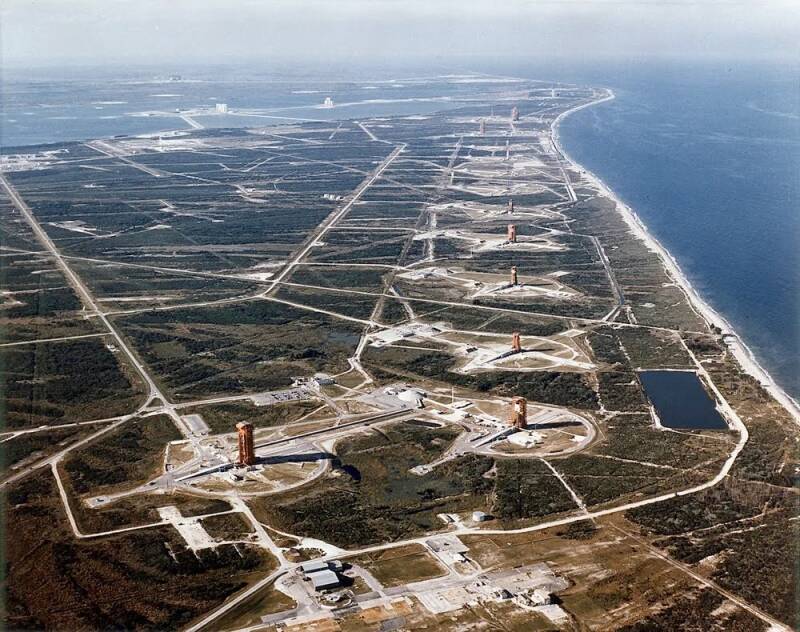
A view of the historic Cape Canaveral Air Force Station. Image credit: NASA.
The U.S. Air Force has officially approved SpaceX’s proposal to convert and operate Space Launch Complex 37 (SLC-37) at Cape Canaveral Space Force Station as a new launch site for Starship. The decision, formalized in a Record of Decision (RoD) issued on Nov. 20, concludes a lengthy environmental review process that included multiple public hearings and extensive ecological assessments.
SLC-37’s history stretches back to the Apollo era. Constructed in the early 1960s, the complex features two pads—A and B—though only Pad 37B was ever active. It supported eight Saturn I and Saturn IB launches between 1964 and 1968, including Apollo 5, the first test flight of the Apollo Lunar Module. After that mission, the site went dormant for more than three decades until Delta IV launches began in 2002. The last Delta IV Heavy mission flew from the pad in April 2024, closing United Launch Alliance’s legacy at the site.
With that chapter complete, SpaceX is now preparing to take over SLC-37, planning to use both pads A and B, as well as NASA’s iconic Pad 39A next door at Kennedy Space Center, to support a high-cadence Starship launch schedule.
Up to 76 Starship Launches Per Year
Under the Air Force’s approval, SLC-37 could support as many as 76 Starship launches and 152 landings annually, pending separate approval from the Federal Aviation Administration (FAA), which must still assess the airspace demands of such a high-volume operation. This scale of activity aligns with SpaceX’s long-term vision of airport-like launch frequency for Starship.
SpaceX confirmed on Dec. 1 that construction work at SLC-37 is already underway, noting on X (formerly Twitter):
“With three launch pads in Florida, Starship will be ready to support America’s national security and Artemis goals as the world’s premiere spaceport continues to evolve to enable airport-like operations.”
The environmental review—one of the most detailed ever conducted for a U.S. launch site—drew concerns from local residents and conservation groups about potential impacts on the Space Coast’s fragile ecosystems.
The Air Force stated in its RoD that it will implement mitigation measures to avoid or minimize harm to protected species, including the southeastern beach mouse, Florida scrub-jay, tricolored bat, and eastern indigo snake. These measures were key in securing final approval.
Starship, a fully reusable two-stage rocket standing 122 meters (400+ feet) tall, is central to SpaceX’s long-term ambitions: sending humans to Mars, enabling large-scale lunar activity, and dramatically reducing the cost of access to space.
NASA is deeply invested in Starship as well. The vehicle was selected as the first crewed lunar lander for the Artemis program, intended to return astronauts to the lunar surface for the first time since 1972.
While Starbase in Texas remains the development hub—hosting all 11 test flights so far—Cape Canaveral will be critical for future operational missions, national security payloads, and rapid-turnaround launches.
Add comment
Comments